Showing posts with label World. Show all posts

U.N. session will test whether Obama can deliver


WASHINGTON — President Barack Obama is about to make his first pilgrimage to the United Nations , where he'll be under scrutiny from fellow world leaders, much as he is domestically, to see whether he can deliver results as well as rhetoric.
Obama took office eight months ago and made a sharp turn in foreign policy, stretching out a proverbial hand to Iran , striking a different tone with the Muslim world and promising cooperation with other countries. Just this week, he scaled back a European missile-defense system that Russia bitterly opposed.
The shifts have won plaudits from governments and publics across much of the world. Now, however, it's crunch time, said foreign diplomats, policy analysts and others. Can Obama deliver results on the world's toughest issues?
"The president needs to convert his widespread popularity in much of the world to effectiveness in much of the world," said Jon Alterman of the Center for Strategic and International Studies , a centrist Washington policy institute. "Leadership is not just telling people what you want."
"Results still need to come. That's something we all know," said a senior European diplomat who requested anonymity to speak more frankly. "But it would be over-ambitious to think results would come very quickly."
The question marks hang most heavily over Obama's policy toward Iran and its suspected nuclear-weapons program.
The United States and five other nations agreed to hold direct talks with Iran beginning Oct. 1 , even though top officials in Tehran say that Iran's enrichment of uranium that could be used for nuclear weapons won't be on the agenda.
Administration officials are skeptical that the talks will produce results. U.S. lawmakers, not to mention Israel , are wary of letting Iran string out the diplomacy while it continues to enrich uranium.
Secretary of State Hillary Clinton warned again in a speech Friday of "more isolation and economic pressure" on Iran if it fails to address questions over its nuclear ambitions.
A few Iranian officials have hinted at flexibility on the nuclear issue. The senior European official predicted that it wouldn't take long to determine whether the negotiations are going anywhere. "You can get a pretty clear idea whether they're serious or not after one or two meetings," he said.
If diplomacy fails, the United States has pledged to seek tough new international sanctions on Iran , possibly including embargoes on its oil exports and refined petroleum imports. Obama, however, may find multilateral diplomacy as frustrating as his predecessor, George W. Bush , did: Russia remains opposed to new sanctions.
Grappling with Russia and Iran is just one of the headaches that Obama will confront in New York .
Along with Iranian President Mahmoud Ahmadinejad , Libyan leader Moammar Gadhafi will be in attendance. His government offended many Americans with its joyous reception for a Libyan agent who'd been convicted of the 1988 Lockerbie jet bombing and was released from jail recently on medical grounds.
Obama and Gadhafi could even share seats at the horseshoe-shaped table in the U.N. Security Council chambers. Obama, who gives his inaugural U.N. address Wednesday, will chair a special Security Council session Thursday on nuclear nonproliferation. Libya is a current council member.
Rather than positive images, the week is more likely to "show the disparity (between Obama's) aspirations for the U.N. and the difficult reality up there," said former U.S. Ambassador John Bolton , who personified the Bush administration's dim view of the world body.
Indeed, other Obama initiatives also appear to have stalled.
The revival of Israeli-Palestinian peace talks, which Obama had hoped to announce at the United Nations , appeared unlikely Friday after U.S. special envoy George Mitchell's Middle East shuttle failed to secure a breakthrough.
Negotiations on climate change, which also will be prominent in Obama's U.N. visit, have been troubled, too.
U.N. officials warn that progress is too slow, tensions are high between the United States and Europe over how much to cut emissions and how to count those reductions and developing countries such as China have held to tough bargaining positions. They want developed nations to make deep cuts and provide generous financing to help poor nations reduce their emissions.
U.S. climate negotiator Todd Stern told a congressional panel Sept. 10 that "the tenor of negotiations . . . has been difficult," marked by the same divisive rhetoric from developed and developing countries that's been heard through 17 years of discussions.
( Renee Schoof contributed to this article.)
MORE FROM MCCLATCHY

Read More......

Iran raids raise pressure on opposition leaders


TEHRAN, Iran – Iranian security forces Tuesday cracked down on the opposition's campaign to highlight torture and abuse of prisoners in the country's postelection crisis, shutting down offices of pro-reform leaders and arresting five of their aides in a startling series of raids.
The raids hiked up the pressure against the top opposition leaders, Mir Hossein Mousavi and Mahdi Karroubi, who hard-line clerics and commanders of the powerful Revolutionary Guards have said should also be arrested.
The arrests suggested that authorities aim to crush the campaign led by Mousavi and Karroubi to bring to light alleged torture and rapes of protesters who were detained in the heavy crackdown against the opposition that followed the disputed June presidential election.
The abuse allegations have been deeply embarrassing for the Iranian government and the clerical leadership, amid reports that several detainees were tortured to death. Karroubi in particular has been vocal in demanding an official investigation into the allegations.
On Tuesday, security forces descended on Karroubi's personal office and the office of his National Confidence Party, said party spokesman, Esmaeil Gerami Moghaddam.
In the personal office, agents pushed by Karroubi himself and arrested one of his aides, Mohammad Davari, an editor of the party Web site, and at the party office, they arrested two other party members, he said.
The security forces sealed both offices and confiscated documents and CDs connected to the party's investigation into abuse allegations, Moghaddam told The Associated Press.
In another raid, security forces arrested Morteza Alviri, a top Karroubi aide and a former vice president, from his home. "I'm being taken away by security agents right now," Alviri told AP by telephone before the call was cut off.
Alviri was a member of a committee set up by Karroubi and Mousavi to probe the abuse allegations.
Also arrested Tuesday was Mousavi's representative to the committee, Ali Reza Beheshti, the pro-reform Web site Mowjcamp reported. Beheshti is the son of Ayatollah Mohammad Hossein Beheshti, a prominent figure from the 1979 revolution and one of the architects of the Islamic Republic.
On Sunday evening, security agents raided a joint Karroubi-Mousavi office that was taking in reports of abuse from released protesters, Moghaddam said.
Karroubi and Mousavi both ran against incumbent hard-liner Mahmoud Ahmadinejad in the June 12 elections. The opposition says Ahmadinejad's victory in the vote was fraudulent and that Mousavi was the rightful winner.
Hundreds were arrested in the heavy crackdown crushing mass protests in support of Mousavi that erupted after the vote in the country's worst unrest since the Islamic Revolution. The opposition says at least 72 protesters were killed, while the government has confirmed 30.
Tuesday's raids suggested the leadership wants to stamp out abuse allegations that have dismayed even many conservative supporters of the government.
But they also raised fears of a move against Mousavi or Karroubi. Last week, Ahmadinejad joined calls for the arrests of the top opposition leadership. Arresting Mousavi, Karroubi or the other top reformist former President Mohammad Khatami would be a major escalation.
Iran's police chief Esmail Ahmadi Moghadam on Tuesday also warned the opposition against using an upcoming annual pro-Palestinian nationwide rally as an occasion to hold anti-government protests. The rally — known as Quds Day, referring to the Arabic word for Jerusalem — takes place on Sept. 18. It is usually an occasion for government supporters to denounce Israel and show support for the Palestinians.
"The main objective of the Quds Day should not be deviated from," Moghadam said, according to the state news agency IRNA.

Read More......

Pinoys abroad to hold Mass, festival for Cory


The late former President Corazon Aquino may have been laid to rest, but Filipinos abroad will continue offering prayers and masses for her.

In Switzerland, some 200 Filipino Catholics in Geneva are to attend a memorial mass for her at the English-speaking Pope John XXII Parish in Geneva, Switzerland.

An article on the Catholic Bishops’ Conference of the Philippines (CBCP) website (www.cbcpnews.com) said the mass is scheduled at 12:30 a.m. Friday (Manila time).

Parish priest Fr. Richard de Lord will officiate the Mass, the CBCP article said.

Expected to attend are Philippine Ambassador to the United Nations Erlinda Basilio and Philippine Consul General to Geneva Juniver Mahilum.

Also expected to attend the mass are Filipinos employed in different United Nations offices.

Mrs. Aquino was laid to rest at the Manila Memorial Park in ParaƱaque City Wednesday, after succumbing to colon cancer last Aug. 1.

In Saipan, the Diocese of Chalan Kanoa will celebrate a memorial Mass at Mount Carmel Cathedral for the departed leader on Friday at 7:30 p.m.

Festival for Tita Cory

In San Francisco, California, the Filipino American Arts Exposition is dedicating its 16th Annual Pistahan Parade and Festival scheduled on August 8 to 9 to the memory of Mrs. Aquino.

The largest celebration of Filipino-Americans in northern California takes place along with the 2nd Annual Filipino American Jazz Festival at the Yerba Buena Gardens in San Francisco.

FAAE selected Marily Mondejar as Hermana Mayor to lead the 2009 celebration and festival, which will begin at 10 a.m. on August 8, followed by a parade at 11 a.m. featuring beautifully themed floats and nearly 100 contingents.

Over 50,000 attendees are expected and will experience and discover the best of Filipino culture and entertainment as this two-day event showcases exhibits, workshops and demonstrations in art, dance, music and food in various pavilions throughout Yerba Buena Gardens, said the FAAE in a statement. - GMANews.TV

Read More......

RP-US ties at forefront of Arroyo-Obama meeting

This summary is not available. Please click here to view the post.

Read More......

Twenty-one dead in Russian bus crash: reports


MOSCOW (AFP) - – Twenty-one people were killed in southern Russia on Friday when a passenger bus collided with a truck, Russian news agencies reported, citing police and emergency officials.

The deadly accident occurred at about 1:00 pm (0900 GMT) when the bus collided head-on with a fuel truck in the country's southern Rostov region, around 1,200 kilometres (750 miles) south of Moscow.

"Twenty-one people died, including the drivers of the fuel truck and the bus," the head of the Rostov region traffic police, Alexander Kaverzin, was quoted as saying by Interfax news agency.

Other news agencies also reported that 21 people were killed in the crash or died in hospital afterwards, citing health and emergency officials. Some of the victims were said to be children.

Television pictures showed the front of the bus entirely smashed in and ambulances surrounding the scene.

"There was no fire but the collision was of monstrous force," Interfax quoted a spokesman for the rescue team as saying.

The wreck was the second major bus accident in Russia this week, after a bus overturned outside the Siberian city of Novosibirsk overnight Sunday-Monday, killing eight and injuring 37.

Fatal traffic accidents are frequent in Russia and are often linked to the dilapidated state of the country's roads, poor adherence to safety rules and drunk driving.

Read More......

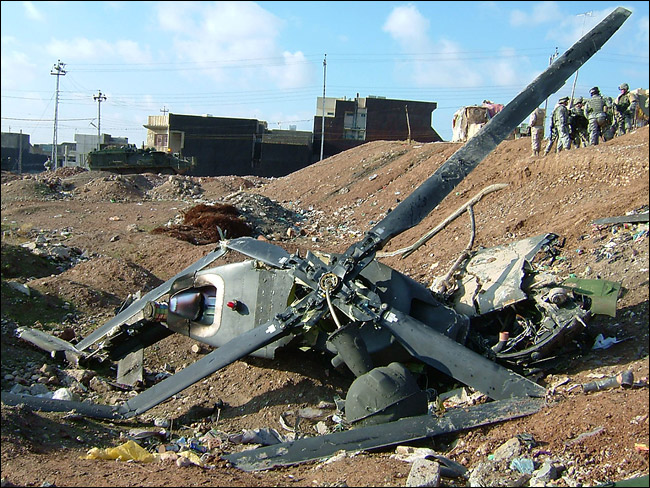
Afghanistan helicopter crash: 10 Pinoys killed


MANILA, Philippines - The Overseas Workers Welfare Administration (OWWA) confirmed yesterday the death of 10 overseas Filipino workers (OFWs) in a helicopter crash at a key NATO airbase in southern Afghanistan on Sunday.

OWWA chief Carmelita Dimzon said they have received verified information that 10 Filipinos were among the 16 who died in the air tragedy.

Dimzon declined to release the names of the dead.

“They were legally deployed three or five years ago but they were unable to return since we imposed a ban in Afghanistan,” Dimzon said.

The Philippine government imposed a ban on the deployment of Filipino workers to Afghanistan due to prevailing hostilities there.

Dimzon gave assurances that the Department of Foreign Affairs (DFA), OWWA and other agencies concerned will work for the immediate repatriation of the bodies of the 10 OFWs once these have been recovered.

“They may already be considered undocumented because of the deployment ban, but we will be giving them all the necessary assistance for Filipino workers,” Dimzon said.

Labor Secretary Marianito Roque earlier said they were still verifying the reported deaths of OFWs in a helicopter crash.

Meantime, the nationalities of the six other helicopter crash victims were not immediately known, according to a report of the ABS-CBN news bureau in Dubai.

The report also said that five others were wounded and were treated at the North Atlantic Treaty Organization (NATO) military facility.

The ABS-CBN report said the families of the 10 Filipino fatalities have been informed of the incident.

All ten victims were workers of Fluor Co. which refused to give information on the crash, the report further said.

Minutes before take-off, which was bound for Spin Buldak, the helicopter suddenly burst into flames near the runway, according to the report.

The workers on board the helicopter were supposed to be brought to Spin Buldak, a border city between Afghanistan and Pakistan.

Last week, 13 Filipino workers bound for Afghanistan were intercepted and offloaded at the Ninoy Aquino International Airport (NAIA) by authorities during an operation of the Task Force Against Illegal Recruitment (TFAIR).

Vice President and presidential adviser on OFWs Noli de Castro said the workers were offloaded from a plane before they could take the flight to Afghanistan.

De Castro, also TFAIR chair, said the 13 Filipino workers were recruited to work as carpenters, plumbers, and electricians in Kandahar airfield, a key NATO airbase in Afghanistan.

The workers were promised a monthly salary of $1,300.

The workers’ departure was prevented due to the deployment ban of the Philippines in five countries, including Afghanistan.

De Castro directed the TFAIR to conduct a thorough investigation on the recruiters of the 13 Filipino workers.

Based on its initial investigation, the TFAIR said travel documents of the workers were facilitated by a certain Faisal Ahmad Muhammad Alamri, who reportedly owns Sara Tourism and Cargo, a travel and tours firm in Dubai where the workers were supposed to land before proceeding to Kandahar airfield.

It was learned that once they reach Dubai, they would be met by their counterparts who will assist their entry into Afghanistan.

In March, an OFW who was working as a carpenter inside the Kandahar Air Base was killed in a rocket attack.

The DFA said Norbert Malana Hobayan died from wounds he suffered after being hit by rocket fire outside the Kandahar Air Base, the second biggest military installation in Afghanistan.

Recon International was reportedly Hobayan’s employer.

The DFA reiterated its advisory to the public not to travel to or seek employment in Afghanistan due to the unstable and volatile security situation in that country.

A Canadian government report said security in the southern Afghan region of Kandahar reportedly deteriorated in late 2008 as Taliban militants stepped up their attacks and crime spiked.

Expansion of infrastructure in Kandahar Air Base in Southern Afghanistan, which serves 13,000 troops from 17 countries, began last year at a cost of $780 million.

For years, the largest military facility in Afghanistan has been Bagram Air Base, north of Kabul, the main hub for US forces concentrated in the mountainous eastern region where the Taliban insurgents are reportedly mixed with other extremists such as al-Qaeda fighters.

The balance of American power appears to be shifting south, toward the deserts and river valleys where the Taliban were born and a majority of the insurgents are local tribesmen. -With Pia Lee-Brago - By Mayen Jaymalin (Philstar News Service, www.philstar.com)

Read More......

Black boxes from Iran's crashed plane recovered


Investigators have recovered the three black boxes belonging to a Russian-made jetliner that crashed in northwest Iran shortly after taking off from the capital, killing all 168 on board, authorities said Thursday.

Remains of the dead _ many badly burned and damaged _ were brought to Tehran for identification, as relatives from Armenia, the passenger jet's destination, headed for Iran to retrieve their loved ones' bodies.

Khristofor Sogomonian, whose father was among those killed, said he would "try to find anything and to commit his body to the soil."

Diana Sarkisian told The Associated Press at the airport in Armenia's capital Yerevan, that her cousin was aboard the plane as the first leg of a trip to her husband in the United States. "I had hoped that she was alive, but now all doubts have fallen away," said Sarkisian, an Iranian national.

The black boxes _ containing the plane's cockpit voice and flight data recorders _ will be key to determining the cause of the crash, which remains unknown. Witnesses said the plane's tail, where the engines are located, was on fire before it went down nose first, plowing a long trench into agricultural fields outside the village of Jannat Abad, and the plane was blasted to bits. Parts of the trench were up to four meters (yards) deep.

Chief investigator Ahmad Majidi said one of the recovered boxes was damaged, state radio said. The boxes would likely be sent to the aircraft's Russian manufacturers for analysis, he said.

A team of Russian air accident experts was due to arrive in Iran on Friday to help in the investigation of the latest crash, civil aviation spokesman Reza Jafarzadeh told the semi-official news agency ISNA.

Majidi initially said two black boxes were found and that investigators were searching for a third. Later state TV reported that the third was found, some 4 kilometers (2.5 miles) away from the crash. Black boxes, built to survive crashes and intense fires, record a plane's performance, like speed and altitude, as well as communications between the cockpit crew or with air traffic controllers.

The crash of the Tupolev jet leased by Caspian Airlines was the latest in a string of air disasters in recent years that have highlighted Iran's difficulties in maintaining its aging fleet of planes. Iranian airlines, including state-run ones, are chronically strapped for cash, and maintenance has suffered, experts say.

U.S. sanctions prevent Iran from updating its 30-year-old American aircraft and make it difficult to get European spare parts or planes. The country has come to rely on Russian aircraft, many of them Soviet-era planes that are harder to get parts for since the Soviet Union's fall.

Iranian civil aviation agency chief Ali Ilkhani said the Tu-154M that crashed was built in 1987, was bought by Iran in 1998 and had an overhaul certificate valid until 2010, state TV said.

Most of the passengers were Iranians, including 42 from Iran's large ethnic Armenian community, as well as 11 members of Iran's national youth judo team.

Five Armenian citizens were among the dead, Armenia's Foreign Ministry said in a statement, along with two Georgians, including a staffer from the Caucasus nation's embassy in Yerevan.

Armenia on Thursday announced a one-day national state of mourning to mark the death of its citizens in the crash. Flags were flying at half-mast on government buildings and Armenian embassies abroad. Local radio and TV have canceled entertainment programs in a show of respect.

Iran's national airline sent a Boeing 747 to Yerevan Thursday to help take victims' relatives to Tehran. Caspian Airlines' representative in Armenia, Arlen Davudian, said victims' relatives would be provided hotel rooms and transportation to the crash site.

Victims' relatives, he added, would be paid compensation of at least euro32,000 ($45,216).

At the site of the crash on Wednesday, flaming wreckage, body parts and personal items were strewn over a 200-yard (meter) area. Firefighters put out blazes from the crash, but smoke smoldered from the pit for hours after as emergency workers searched for the data recorders and other clues to the cause.

The Tu-154M jet had taken off from Tehran's Imam Khomeini International Airport. It crashed at 11:30 am, about 16 minutes after takeoff, outside Jannat Abad, near the city of Qazvin, around 75 miles northwest of Tehran.

The crash is Iran's worst since February 2003, when a Russian-made Ilyushin 76 carrying members of the elite Revolutionary Guards crashed in the mountains of southeastern Iran, killing 302 people aboard. That crash was a sign of how maintenance problems have also affected Iran's military.

Caspian Airlines is an Iranian-Russian private joint venture founded in 1993.

>___

Read More......

Bombs kill 11 in Iraq, highlight security fears

A suicide bomber on Wednesday killed six people, including an Iraqi policeman, in an attack on security forces in a former insurgent stronghold in Iraq's western Anbar province, police said. A Baghdad bombing killed five other people.

The attacks highlighted the security challenges still facing Iraq despite a sharp drop in violence, and the withdrawal of U.S. combat troops from Iraqi cities at the end of last month. The pullout signals the growing confidence of Iraqi forces to handle security on their own, though tension among the country's factions remains a threat to stability.

Wednesday's attack in the western city of Ramadi was carried out by a suicide bomber driving a minibus who struck a checkpoint of Iraqi soldiers and police, killing a policeman and five civilians, said a local police officer. Earlier reports said six policemen were among the dead.

The attack injured 19 others, including five police, said the officer in Ramadi, which is located some 70 miles (115 kilometers) west of Baghdad. The officer spoke on condition of anonymity because he was not authorized to talk to the media.

Anbar used to be a stronghold of the Sunni insurgency but has been relatively quiet in recent months, partly because Sunni tribal leaders joined up with U.S.-led forces to fight extremists.

On Wednesday evening, a bomb in Baghdad's Sadr City district killed five people and injured another 23, all of them men, a police officer and a hospital official said on condition of anonymity. The officials spoke on condition of anonymity because they were not authorized to speak to the media.

The bomb was hidden in a plastic bag and exploded close to a big tent that was being used for the funeral service of the wife of a Shiite tribal leader, the officials said. Only men were in the tent, while female mourners were in a nearby house.

Abbas Hussein, an oil ministry employee and a resident of Sadr City, said he was on his way to the funeral when he saw a flash and felt the shock wave of the blast.

"We hurried toward the blazing tent. We found scattered chairs, tables, food on the ground mixed with blood, women covered with black from the house, shouting," he said. "My friend and I were on our way to a funeral for an old woman, but tomorrow we should go to a lot of funerals for this cruel blast."

Also Wednesday evening, a bomb went off in the mostly Shiite district of Karradah in central Baghdad, wounding nine civilians, police said.

There were no claims of responsibility for the blasts in Ramadi and Baghdad, but suspicion fell on Sunni extremists who have targeted security forces and Shiite communities in an apparent attempt to re-ignite sectarian strife and destabilize the country.

In Baghdad, dozens of mourners, including senior officials from the Interior Ministry, attended the funeral of the two traffic policemen who were killed in eastern Baghdad. Fellow traffic police motorcyclists led the funeral procession, which included the slain officers' wooden caskets wrapped in Iraqi flags.

The officers, Jassim Shuwaili, 24, and Hussein Qassim, 19, were chasing two gunmen in a speeding car after they refused to stop at a checkpoint near Baghdad's fortified Green Zone, according to Maj. Gen. Zuhair Ebada, head of traffic police operations in Baghdad's east side. One of the gunmen, who was later arrested, opened fire and killed the two motorcycle policemen.

Qassim, who joined traffic police six months ago, is survived by a wife and nearly two-year old baby. Shuwaili, who had three years of service on the force, was single.

"We ask the government to implement the ultimate the penalty against the criminals ... The martyr was serving his country and people," said Shuwaili's brother-in-law, Rafid Abdul-Hussein.

Separately, one person was killed and nine others were wounded when a bomb exploded near an Internet cafe late Tuesday night in south Baghdad. The explosion in a Shiite enclave in the mainly Sunni neighborhood of Dora damaged the cafe and a nearby shop.

Read More......

Iranian plane crashes into field, killing all 168


– A Russian-made jetliner carrying 168 people nose-dived into a field after taking off from the Iranian capital on Wednesday in a fiery crash that shredded the aircraft and killed everyone aboard _ Iran's worst air disaster in six years. Witnesses say the plane's tail was on fire before it went down.

It was the latest in a string of deadly crashes in recent years that have highlighted Iran's difficulties in maintaining its aging fleet of planes.

Iranian airlines, including state-run ones, are chronically strapped for cash, and maintenance has suffered, experts say. U.S. sanctions prevent Iran from updating its 30-year-old American aircraft and make it difficult to get European spare parts or planes as well. The country has come to rely on Russian aircraft, many of them Soviet-era planes that are harder to get parts for since the Soviet Union's fall.

The Caspian Airlines Tupolev jet's impact plowed a deep, long trench into agricultural fields outside the village of Jannat Abad, and the aircraft was blasted to bits. Flaming wreckage, body parts and personal items were strewn over a 200-yard (meter) area. Firefighters put out blazes from the crash, but smoke smoldered from the pit for hours after as emergency workers searched for data recorders and other clues to the cause.

Ali Akbar Hashemi, a 23-year-old, was laying gas pipes in a house by the field when he saw the stricken jet overhead. He said the plane was circling in the air, flames shooting from its tail section.

"Then, I saw the plane crashing nose-down. It hit the ground causing a big explosion. The impact shook the ground like an earthquake," Hashemi told The Associated Press by phone.

The Tu-154M jet had taken off from Tehran's Imam Khomeini International Airport on Wednesday morning and was headed to the Armenian capital Yerevan. It crashed at 11:30 am about 16 minutes after takeoff outside Jannat Abad, near the city of Qazvin, around 75 miles northwest of Tehran, civil aviation spokesman Reza Jafarzadeh told state media.

At Yerevan's airport, Tina Karapetian, 45, sobbed and said she had been waiting for her sister and the sister's 6- and 11-year-old sons, who were due on the flight.

"What will I do without them?" she cried before collapsing to the floor.

The cause of the crash was not immediately known.

The plane was carrying 153 passengers and 15 crewmembers, Jafarzadeh and the deputy chairman of Armenia's civil aviation authority Arsen Pogosian said. "In all likelihood, all on board were killed," Pogosian told reporters at Yerevan airport.

Most of the passengers were Iranians, many of them from Iran's large ethnic Armenian community, as well as 11 members of Iran's national youth judo team. Five Armenian citizens were among the dead, Armenia's Foreign Ministry said in a statement, along with two Georgians, including a staffer from the Caucasus nation's embassy in Yerevan.

Serob Karapetian, the chief of Yerevan airport's aviation security service, said the plane may have attempted an emergency landing, but reports that it caught fire in the air were "only one version." He did not elaborate. A police officer told Iran's semi-official ISNA news agency that several witnesses reported seeing the plane's tail on fire.

The Tupolev's three engines are in its tail section. The flames there could indicate "an uncontained engine failure," said Patrick Smith, a pilot and the air travel and safety writer for Salon.com.

But he said it's too early to tell. The crash's root cause could be elsewhere, and the flames a sign of a compressor stall caused when the plane went out of control, interrupting airflow through the engine, Smith said.

The crash is Iran's worst since February 2003, when a Russian-made Ilyushin 76 carrying members of the elite Revolutionary Guards crashed in the mountains of southeastern Iran, killing 302 people aboard. That crash was a sign of how maintenance problems have also affected Iran's military.

Caspian Airlines is an Iranian-Russian private joint venture founded in 1993, with a fleet of Tu-154s built between 1989 and 1993. Russia produced 900 Tu-154s until production was halted in 1996.

The average age of Iran's fleet of aircraft is 22 years, said Masoud Mohajer, an aviation expert in Tehran. Age itself may not be a problem _ even older jets are in service around the world _ but keeping them maintained is. Mohajer said Iranian airlines can't afford to keep even Russian planes in shape because of lack of government support.

He pointed to "the financial inability to buy new planes or carry out maintenance requirements."

"Iranian airliners don't have enough cash even to buy new Russian planes. The government controls ticket prices. It's not profitable for airliners," Mohajer said.

Some of the jets in Iran's fleet are U.S.-made craft bought before the 1979 Islamic Revolution, which led to a cut-off in ties between the nations. U.S. sanctions since prevent Iran from buying parts for those planes or new ones.

In December 2005, 115 people were killed when a pre-1979 U.S.-made C-130 plane, crashed into a 10-story building near Tehran's Mehrabad airport.

The sanctions also bar sales of European jets with a certain amount of U.S. parts, limiting Iran's ability to buy from Europe.

As a result, Iran has focused on Russian-built planes _ like the Tupolev and Ilyushins, the Soviet-era workhorses for Russian civil air fleets. After the Soviet collapse, government funding sharply declined for manufacturers of aircraft and spare parts, and other countries using the planes have had a harder time getting parts.

There have been two other fatal crashes involving Tu-154s in Iran since 2002 that killed 128 people.

"There is a big question about the availability of spares for aircraft generally in Iran," said Chris Yates, a Britain-based aviation analyst. The Iranians may have turned to buying spares produced locally or from the black market, he said.

Smith said Russian aircraft suffer from a somewhat undeserved bad reputation _ their "less impressive" record is in part because they have historically been used in harsher environments than Western models, like arctic areas, and by airlines in developing countries where safety standards aren't as strict.

"The plane is only as safe as how it's operated and maintained and how well trained its crewmembers are," he said.

Read More......

US general confident defending from NKorea


The commander of US forces in South Korea said Tuesday he was "absolutely confident" of defending against any threat from communist North Korea.

General Walter Sharp said US and South Korean forces were ready to counter potential North Korean attacks ranging from a land invasion to cyber warfare to a missile launch aimed at the continental United States.

"I am absolutely confident that the capabilities that we and the Republic of Korea have are prepared for any threat," Sharp told a news conference in New York, which was video-linked to Washington.

North Korea has in recent months tested an atom bomb, launched missiles and bolted out of a six-nation agreement on ending its nuclear drive. Pyongyang is also a suspect in recent attacks against US and South Korean websites.

Sharp declined comment on whether North Korea planned further tests or on speculation that the barrage of actions are linked to the failing health of North Korean strongman Kim Jong-Il.

"All the governments around the world are hoping and pushing for Kim Jong-Il to change his provocations," Sharp said.

He voiced hope that Kim would return to agreements on denuclearization and "take a new path by which North Korea can emerge as a nation that takes care of its people and does not continue to threaten the world."

Sharp, who technically also heads the UN command maintaining a 1953 armistice on the Korean peninsula, was in New York for meetings including with UN chief Ban Ki-moon.

Read More......

Philippine president to visit Obama on July 30


Philippine President Gloria Macapagal Arroyo will meet with President Barack Obama at the White House on July 30.

The White House announced the visit Saturday as Obama wrapped up a weeklong trip to Russia, Italy and Ghana.

Obama and Macapagal Arroyo will discuss ways to enhance cooperation between their countries on a variety of isues, including counterterrorism, climate change and the alliance between the U.S. and the Philippines.

Arroyo also will meet with other key government officials while in Washington.

The White House says she will be the first Southeast Asian leader to visit Washington under Obama's administration.

Read More......

Rape culture condemned in South Africa

Dumisani Rebombo wasn't circumcised, did chores considered girls' work and was sick of being taunted for not being a man. So at age 15, he took the only course considered "manly" in his rural South African village: He raped a girl.
Twenty years later he searched for the woman to beg her forgiveness — a rarity in a nation where a culture of sexual violence is deeply embedded in society.
Rebombo agreed to share his story with The Associated Press on Thursday as researchers presented findings at a conference on sexual violence that show more than one in four South African men surveyed admitted to committing rape.
"Rape is an expression of male sexual entitlement," said Rachel Jewkes, chief researcher for the survey conducted by the government-funded Medical Research Foundation. "South Africa is an immensely patriarchal society. The history of the country has shaped the dominant forms of South Africa's racially defined masculinities."
Many human rights activists were not surprised by the survey's findings, saying they underscore the deep cultural roots of sexual violence in a country blighted by crime and the devastating emotional, social and economic legacy of apartheid's brutal racial segregation.
"This tells the story of many boys, of many men," said Rebombo, who is now 48 and works in community outreach to try to raise awareness of and prevent sexual abuse.
A recent report published by Interpol says South Africa has the highest incidence of rape among its member states. Some 54,000 rapes were committed in 2006, according to police statistics — nearly 150 per day, or one for every 925 people in the country.
And that does not tell the whole story: advocates say many attacks go unreported because of the stigma associated with rape. By comparison, Americans reported one rape for every 2,642 people in 2006 — roughly a third of the South Africa rate.
For Rebombo, rape was a means to prove his manhood.
As a teen, he said he was cruelly taunted because he was not circumcised. Circumcision is considered a rite of passage in some tribes — but his father had almost died as a result of the unsanitary and brutal procedure, and swore his son would not be abused that way.
So Rebombo was subjected to daily, constant jeering.
"I was viewed as not man enough," said the large, soft-spoken man.
Other boys pressured Rebombo to "teach a lesson" to one teenage girl who did not want to go out with them. He resisted at first, fearful of his religious parents and their good standing in the community. Then he relented.
On that Saturday, Rebombo was plied with beer and marijuana to overcome his nerves. "I had difficulty breathing," he said. "I had never had sex before. I was terrified."
The girl was brought to a field and Rebombo and another boy were left with her, he said.
The other boy "started raping her. She fought him. I was just there, dizzy with all the stuff. He just stood up and said: 'Your turn.' I was there on top of her," he said.
Afterward, "she just ran home."
Guilty, and fearful she would tell, he avoided the girl and a year later moved to another village.
Years later, while working in Johannesburg counseling unemployed mothers about HIV prevention in 1996, he was struck by the women's tales of abuse.
"That forced me to do my own introspection," he said. "I felt I needed to go find her and apologize."
So he went back to his village and tracked down the woman he had raped. "I told her what I did those years back was wrong, and I am here to ask for forgiveness."
Through sobs, she told Rebombo she had since been raped by two other men. Married with children, she kept the assaults secret, but sometimes cringed when her husband touched her. Her life had never been the same, she said.
She accepted Rebombo's apology and forgave him. "She told me: 'Maybe you could teach other men out there not to do the same thing.'"
Today, Rebombo works for the Olive Leaf Foundation, a South Africa-based development group, trying to do just that. He counsels men, women and children in an effort to prevent the spread of HIV/AIDS and sexual abuse.
"If more men would stand up and say 'This is wrong,' the better we can fight this carnage," said Rebombo, the father of two daughters, aged 16 and 27, and a 24-year-old son.
Rape in South Africa is "deeply embedded in ideas about manhood," according to the survey presented Thursday at the conference outside Johannesburg. Initial results, released last month, showed that nearly 28 percent of the men interviewed said they had forced a woman or girl to have sexual intercourse against her will.
Jewkes said the survey results showed rape in South Africa was "significantly associated" with childhood trauma and a breakdown of the family.
Researchers, who gave no margin of error, interviewed men from some 1,700 households from a representative cross-section of the population in South Africa's Eastern Cape and KwaZulu-Natal provinces.
Only a third of the men in the sample said their fathers were often or always at home, while two-thirds said their mothers were.
"We know that if children are being raised by relatives they are much more vulnerable to being abused," Jewkes said, adding that 60 percent of women who report rape were assaulted by someone they knew; with children this figure was as high as 80 percent.
Researchers acknowledged the sexism inherent in most cultures but highlighted the strong patriarchal nature of African culture.
In South Africa, some blame the rape statistics on the poverty and oppression of the apartheid regime that ended 15 years ago.
"Apartheid made violence an instrument of control and violence became the norm," said rights activist Mbuyiselo Botha. "Men would feel emasculated." Angry and humiliated, they took out their frustrations on the weakest victims, women and children, he said.
Some 5.2 million of South Africa's 50 million people are infected with the AIDS virus — the highest rate in the world.
President Jacob Zuma, an avowed polygamist with three wives, was acquitted of rape in 2006, but only after he acknowledged having unprotected sex with the HIV-positive daughter of a family friend.
Zuma's remarks about women, sex and Zulu culture caused major controversy and there were ugly scenes outside the courtroom with his supporters burning pictures of the woman.
While Zuma now speaks out against violence against women, the trial did "tremendous damage" to efforts to encourage more modern attitudes toward women, Botha said.
Daily headlines point to botched rape investigations and humiliation for women who do press charges.
On Monday, the daily newspaper The Star carried a front-page story about a convicted rapist given a four-year jail sentence.
The judge said he was being lenient because the perpetrator was "well-educated" and his victim was "a grown-up woman" who had been hitchhiking.

Read More......

Thousands protest in Iran, defying crackdown vow

Thousands of protesters streamed down avenues of the capital Thursday, chanting "death to the dictator" and defying security forces who fired tear gas and charged with batons, witnesses said.
Turning garbage bins into burning barricades and darting through choking clouds of tear gas, the opposition made its first foray into the streets in nearly two weeks in an attempt to revive mass demonstrations that were crushed in Iran's postelection turmoil.
Iranian authorities had promised tough action to prevent the marches, which supporters of opposition leader Mir Hossein Mousavi have been planning for days through the Internet. Heavy police forces deployed at key points in the city ahead of the marches, and Tehran's governor vowed to "smash" anyone who heeded the demonstration calls.
In some places, police struck hard. Security forces chased after protesters, beating them with clubs on Valiasr Street, Tehran's biggest north-south avenue, witnesses said.
Women in headscarves and young men dashed away, rubbing their eyes in pain as police fired tear gas, in footage aired on state-run Press TV. In a photo from Thursday's events in Tehran obtained by The Associated Press outside Iran, a woman with her black headscarf looped over her face thrust her fist into the air in front of a garbage bin that had been set on fire.
In another image, a man dropped to his knees, overcome by the effects of tear gas.
But the clampdown was not total. At Tehran University, a line of police blocked a crowd from reaching the gates of the campus, but then did not move to disperse them as the protesters chanted "Mir Hossein" and "death to the dictator" and waved their hands in the air, witnesses said. The crowd grew to nearly 1,000 people, the witnesses said.
"Police, protect us," some of the demonstrators chanted, asking the forces not to move against them.
The protesters appeared to reach several thousand, but their full numbers were difficult to determine, since marches took place in several parts of the city at once and mingled with passers-by. There was no immediate word on arrests or injuries.
It did not compare to the hundreds of thousands who joined the marches that erupted after the June 12 presidential election, protesting what the opposition said were fraudulent results. But it was a show of determination despite a crackdown that has cowed protesters, who have not held a significant rally for the past 11 days.
Onlookers and pedestrians often gave their support. In side streets near the university, police were chasing young activists, and when they caught one, passers-by chanted "let him go, let him go," until the policemen released him. Elsewhere, residents let fleeing demonstrators slip into their homes to elude police, witnesses said.
All witnesses spoke on condition of anonymity for fear of government reprisals. Iranian authorities have imposed restrictions that ban reporters from leaving their offices to cover demonstrations.
Many of the marchers were young men and women, some wearing green surgical masks, the color of Mousavi's movement, but older people joined them in some places. Vehicles caught in traffic honked their horns in support of the marchers, witnesses said. Police were seen with a pile of license plates, apparently pried off honking cars in order to investigate the drivers later, the witnesses said.
Soon after the confrontations began, mobile phone service was cut off in central Tehran, a step that was also taken during the height of the postelection protests to cut off communications. Mobile phone messaging has been off for the past three days, apparently to disrupt attempts at planning.
The calls for a new march have been circulating for days on social networking Web sites and pro-opposition Web sites. Opposition supporters planned the marches to coincide with the anniversary Thursday of a 1999 attack by Basij on a Tehran University dorm to stop protests in which one student was killed.
Demonstrators dispersed by nightfall. But after sunset, shouts of "death to the dictator" could be heard from rooftops around the city — a half-hour nightly ritual by Mousavi supporters that has continued even since the previous crackdown.
Mousavi and his pro-reform supporters say he won the election, which official results showed as a landslide victory for incumbent hard-liner Mahmoud Ahmadinejad. Days of massive demonstrations erupted, until supreme leader Ayatollah Ali Khamenei declared the results valid and warned that unrest would not be tolerated.
In the crackdown that followed, at least 20 protesters and seven Basijis were killed, according to police.
Police have said 1,000 people were arrested in the crackdown and that most have since been released. But prosecutor-general Qorban-Ali Dorri Najafabadi said Wednesday that 2,500 people were arrested and that 500 of them could face trial, Press TV reported. The remainder have been released, Najafabadi said.
Arrests have continued over the past week, with police rounding up dozens of activists, journalists and bloggers.
In the latest detentions, prominent human rights lawyer Mohammad Ali Dadkhah was taken away by security forces from his office Wednesday along with his daughter and three other members of his staff, the pro-opposition news Web site Norouz reported. A former deputy commerce minister in a previous pro-reform government, Feizollah Arab-Sorkhi, was also arrested at his Tehran home, the site reported.
A large number of top figures in Iran's reform movement, including a former vice president and former Cabinet members, have been held for weeks since the election.
Iranian authorities have depicted the postelection turmoil as instigated by enemy nations aiming to thwart Ahmadinejad's re-election, and officials say some of those detained confessed to fomenting the unrest. Opposition supporters say the confessions were forced under duress.
Ahead of the protests, Tehran's governor Morteza Tamaddon accused "foreign counterrevolutionary networks" of plotting new marches. "If some individuals plan to carry out any anti-security actions by listening to (protest) calls ... they will be smashed under the feet of our aware people," he said late Wednesday, according to the state news agency IRNA.
___
Associated Press Writer Lee Keath in Cairo contributed to this report.

Read More......

Honduras first lady leads fight for Zelaya return

Honduras' first lady has emerged as the public face of the movement to restore President Manuel Zelaya to power, a role she took against her husband's wishes and despite her continuing fears for her safety.

Xiomara Castro told The Associated Press on Wednesday that she was so afraid the Honduran military would shoot her on sight after soldiers whisked Zelaya out of the country in his pajamas, she fled to the U.S. Embassy.

Though she still sleeps in hiding, she vowed to take to the streets daily in protest of the June 28 coup that ousted her husband. The family of a pro-Zelaya demonstrator slain by soldiers on Sunday urged her to get involved — over Zelaya's objections.

"He told me that my presence could cause more problems, more persecution on the family. But I insisted," Castro said, while trudging up a steep road with 3,000 Zelaya supporters, who blocked traffic on a route connecting the capital of Tegucigalpa with a highway to Nicaragua. "I consider our presence here as like having the president himself here, like feeling that the president is standing firm."

Zelaya arrived in Costa Rica late Wednesday to meet with Nobel laureate Oscar Arias, that country's president, who is leading negotiations to end the Honduran political crisis.

The ousted Honduran leader immediately set up a hard line ahead of Thursday's talks, telling reporters at the airport that he plans to "listen to the de facto goverment explain how they plan to leave." He said he wasn't in Costa Rica to negotiate because doing so "would be like inviting to dialogue someone who violated your family."

Micheletti, who has said that Zelaya's return to power is not negotiable, said Wednesday that a commission will represent Honduras in Costa Rica. He didn't say if he would be part of that delegation.

"In two days there could be a solution or it could be two months, and we still don't have one," Arias said in the Costa Rican capital.

But even as the two sides planned to meet, Castro said she couldn't disclose where she is staying for fear of members of the Honduran political establishment — people she recently counted as friends.

Zelaya and Micheletti both hail from the Liberal Party. Castro was a longtime friend of Micheletti's wife, whose name is nearly identical: Siomara Castro.

The morning of the coup, Castro said she and her teenage son Hector sneaked to the U.S. embassy, then stayed there until the attorney general's office said no charges would be filed against Zelaya family members.

The pair then headed to the residence of U.S. Ambassador Hugo Llorens.

Castro remained out of sight for nine days after the coup. But she came out of hiding at the request of the family of Isis Obed Murillo Mencia, 19, a protester from Zelaya's home state of Olancho who was shot by soldiers at the airport Sunday during Zelaya's unsuccessful attempt to return.

Castro said she would like to return to her home, but refused to say if she had left the ambassador's residence. But she also said if anyone had wanted to harm her, they would have done so during the coup.

"I know that Romeo Vasquez had the opportunity to kill me and he didn't do so," she said, referring to the head of the Honduran armed forces. Zelaya fired Vasquez after he refused to carry out the military's election duties for a referendum Zelaya had planned the day he was deposed. The Supreme Court ruled it was illegal, setting the stage for the coup.

Arias, negotiating at the behest of U.S. Secretary of State Hillary Rodham Clinton, has a proven record of resolving international crises, winning the Nobel Peace Prize in 1987 for his role in mediating civil wars in Central America.

"We are going to give them both equal treatment," Arias said of the two men claiming to be president of Honduras.

Meanwhile, Venezuelan Oil Minister Rafael Ramirez said his country would cancel oil shipments to Honduras. Zelaya was an ally of that country's president, Hugo Chavez, who had supplied Honduras crude on 25-year credit.

Ramirez said Venezuela can't provide oil "to a dictatorship, and especially not to a small group of businessmen who led a coup."

Zelaya's supporters claim Honduras' wealthy class backed the military uprising because Zelaya's policies favored the poor, including his raising of the minimum wage.

The United Nations, the Organization of American States and governments around the world insist Zelaya is Honduras' rightful president. The country's Congress says it legally made Micheletti, former head of the legislature, interim president.

Marching in a white cowboy hat with a red ribbon reading "Victory for the People: Zelaya," Castro said she spoke briefly to her husband the morning of the coup and then again four days later. But their first lengthy talk came Tuesday, when a radio station put them in touch and aired the conversation.

"In these times of tension, the only thing that we know is we are more united than ever," said Zelaya, brushing off rumors that the couple was close to separating before the coup.

"Today we are a fractured family because (Zelaya is) in one place and my kids are in another and I'm in another," she added. "But all of this has strengthened us."

Read More......

Chinese Troops Take Control in Urumqi Amid Tension

Three days after ethnic clashes left 156 dead in the city of Urumqi, the Chinese government is still struggling to bring calm and order to the Xinjiang capital. On July 8, Communist Party leader Li Zhi announced that the government would seek the death penalty for anyone found responsible for the killings as President Hu Jintao flew home from Italy, cutting short his visit to the G-8 summit. While the city hasn't seen a return to fighting on the scale it witnessed on July 5, scattered outbursts are stoking fears that violence could erupt again, and tensions on all sides of the conflict are still high.

Masses of security forces paraded through the streets of Urumqi on the morning of July 8. Some 40 trucks filled with rifle-toting People's Armed Police crept through the largely Uighur area near the Grand Bazaar, in the south of the city, as a military helicopter made sweeps overhead. Dozens of Uighurs eating breakfast at street stalls walked out to watch the procession. "There are so many," said one young man, shaking his head in disbelief. (See pictures of China's race riots.)

That was the signal the Chinese government meant to send. It was in this district that rioting by hundreds of Uighurs, a Turkic minority group that comprise about 15% of the city's population, exploded after police blocked a protest prompted by the deaths of two Uighurs at a factory in the coastal Guangdong province in late June. The fighting, which targeted the city's majority Han Chinese, left 156 people dead, officials say, and more than 1,000 injured.

On July 7, thousands of club-wielding Han Chinese mobilized on the streets, clearly intent on revenge. Military police blocked them from moving south into Uighur neighborhoods, at times firing tear gas. Xinjiang People's Hospital in the city center took in at least a dozen Uighurs who were beaten. One patient, 22-year-old Abdul, says he was attacked by a crowd of about 100 Han men. He suffered a head injury and a broken arm. (See TIME's China covers.)

There was fear that the violence might spread overnight. The government enforced a curfew, and in the morning Uighur districts appeared largely undisturbed. On July 8 small groups gathered in both Uighur and Han areas, but few people were carrying clubs and knives. There were reports of scattered attacks, but no large-scale violence. Dozens of trucks and hundreds of troops lined Renmin Road, a major east-west corridor that roughly separates the Uighur and Han districts.

State-run media and sound trucks were rebroadcasting a speech by Xinjiang's Communist Party Secretary, Wang Lequan, encouraging residents to focus their anger on "outside forces" rather than on Uighurs. "Comrades, this sort of action is totally unnecessary," he said of the Han street mobs. "Our government forces are enough to defeat the evildoers."

The government has blamed the unrest on Rebiya Kadeer, a Uighur activist who lives in the U.S. She has denied any connection to the violence, and says it was the Chinese government's crackdown on the peaceful demonstration by Uighurs that led to the riot.

Since Hu's return from Italy, the country's top officials are now focused on the Xinjiang unrest. Minister of Public Security Meng Jianzhu addressed more than 100 police officers clad in all-black riot gear on a street near the People's Square in Urumqi, telling them that they were responsible for the people's safety. Security forces have come from as far away as central Shanxi and eastern Anhui provinces, and the influx of troops has brought the city largely under control. (See TIME's coverage of the G-8 summit.)

But healing the wounds of the past week will be much tougher. Li Qingcheng, a 43-year-old Han bus driver, suffered injuries to his head, back and hands when a mob of Uighur men attacked his bus during the riot on July 5. He said the men smashed the bus windows and then went after passengers. "This society has gone crazy," he said from his bed at Xinjiang People's Hospital. "This was a good society, and then they did something like this."

Read More......

Iran president vows changes as opponents make joint plea

President Mahmoud Ahmadinejad vowed on Tuesday to change his team and show respect for Iran's youth as opposition leaders made a joint plea for the release of hundreds of people held in election protests.

Ahmadinehad insisted his re-election was fair, saying: "This was the most beautiful and cleanest election", but he pledged: "The structure of government should change, the changes in the government will be considerable."

The new government to be installed in a few weeks' time will put "housing, employment and economic reform" on its agenda, he said in a televised address to the Iranian people following his controversial success in the June 12 poll.

"We must respect people's feelings, especially the youth," said Ahmadinejad, whose opponents allege he was only returned to office through vote rigging.

The re-election of the hardline incumbent, who enjoys the backing of supreme leader Ayatollah Ali Khamenei, sparked fraud allegations from two of his rival candidates, ex-prime minister Mir Hossein Mousavi and reformist Mehdi Karroubi.

The two challengers brandished their continuing defiance on Tuesday in a joint statement with former president Mohammad Khatami.

"The useless wave of arrests should end immediately and those who are being detained without even committing the slightest sin should be released," they said in the declaration released via Mousavi's campaign website, Ghalamnews.

The opposition leaders also denounced what they called "brutal attacks" on "innocent people, student dormitories and residential houses" by Iranian security forces.

"The atmosphere where security forces continue to be deployed must end, as it only radicalises political movements," they said.

"If rights of the the protesters had been respected or if the people had not been lied to or disrespected, the situation would have never turned into a national crisis," Mousavi, Karroubi and Khatami said.

Iran was rocked by violent protests after the election, with authorities locking up reformists, political activists, journalists and protesters to quell the worst unrest since the 1979 Islamic revolution.

The post-election turmoil left at least 20 people dead and shook the very pillars of the Islamic regime, exposing deep differences in the country of 70 million people and even saw unprecedented criticism of Khamenei.

Iran's police chief Esmail Ahmadi Moghadam said last week that "two-thirds" of around 1,000 people arrested during the protests have been released. Human rights groups estimated that as many as 2,000 had been detained.

Mousavi continues to call for a fresh poll despite the powerful electoral watchdog, the Guardians Council, upholding Ahmadinejad's victory.

Iran has accused Western powers, notably Britain and the United States, of stoking post election unrest.

Ahmadinejad hit out at world powers in Tuesday's speech, railing against their "interference and childish acts" and vowing that Iran "will not back down in seeking its deserved position and rights."

Iran continues to hold one of nine local British embassy employees arrested on accusations of inciting violence, while Paris said the authorities have detained a French woman academic in Tehrans notorious Evin prison.

President Nicolas Sarkozy said on Tuesday that spying charges against Clotilde Reiss, 23, were "pure fantasy" and that she should be released "very, very soon."

"Let me say in the clearest and simplest way possible: we demand the release of our compatriot," Sarkozy said.

Iranian authorities have made no comment on her detention.

In Vienna, former Iranian president Abolhassan Banisadr boldly accused Khamenei -- who has ruled the Islamic republic for 20 years -- of being personally behind the alleged election irregularities.

"Khamenei ordered the fraud in the presidential election and the ensuing crackdown on protestors," Banisadr said at a symposium.

"The regime is edging closer to the abyss and is holding on to power solely by means of violence and terror," said Banisadr, who was Iran's first elected post-revolution president and has been living in exile in France since 1981.

US President Barack Obama, who had criticised the Iranian crackdown and raised questions about the election, strongly denied that the United States had given Israel a green light to strike Iran's nuclear facilities.

"Absolutely not," he said in an interview with CNN.

Obama said diplomatic channels should be used to resolve the international standoff over Iran's nuclear drive which the West fears is a cover for efforts to build atomic weapons despite Tehran's denials.

Read More......

Nigerian militants destroy Chevron facility, hijack tanker

Nigerian militants said Monday they destroyed a Chevron oil pipeline junction and seized six crew from a ship in the latest attacks on Nigeria's key money earner since the government offered an amnesty.

The Movement for the Emancipation of the Niger Delta (MEND) said it attacked the Okan manifold and captured three Russians, two Filipinos and one Indian from a tanker, both on Sunday.

According to the rebels, the manifold controls about 80 percent of the crude that Chevron Nigeria Limited sends to its BOP Crude Loading Platform.

A Chevron spokesman said an investigation had started and no comment would be made.

The rebels seized the chemical tanker, Sichem Peace, in Delta State waters for ignoring a warning to industry tankers to stay away from the Niger Delta.

"Their arrest is meant to serve as a warning to others that there are root issues that have to be resolved with the Nigerian government before normalcy can resume," said a MEND statement.

Those issues included an end to security force operations against rebels and progress on getting the wealth generated by the oil-rich Niger Delta channeled back into the region.

President Umaru Yar'Adua on June 25 offered an amnesty to any rebel in the Niger Delta who lays down his arms. The government has said the amnesty, which starts August 6, also applies to detained MEND leader Henry Okah.

But MEND, which says it is fighting for a fairer distribution of the Delta oil wealth, has claimed at least five attacks since the offer was made.

Its latest statement said: "As long as the Nigerian government and military JTF (Joint Task Force) has chosen to carry out kidnappings and arson against innocent communities and individuals, ... (we) will fight for them."

One of MEND's demands is for the JTF -- a special unit made up of the military, police, navy, airforce and state intelligence services -- to pull out of the Niger Delta.

But JTF says it will only pull out when its mission to rid the region of crime and unrest is accomplished.

"We have a clear mandate to end the violence and protect oil facilities in this volatile region," said JTF spokesman Colonel Rabe Abubakar.

"We will quit as soon as our task is over," Abubakar told AFP in an interview.

MEND on Monday called for the release of a traditional ruler it said the military is holding.

It has also demanded the release of Okah, who was detained in September 2007 and now faces treason charges.

"Government should display the highest form of integrity and sincerity over the detention of Henry Okah at this period of his fading health," said the MEND statement.

MEND said on Saturday that it destroyed Shell's Cawthorn Channel 1 well head, which supplies the Anglo-Dutch company's key Bonny loading terminal in Rivers state.

The rebels vowed on Saturday to thwart a 10-billion-dollar trans-Saharan gas pipeline project linking vast reserves in Nigeria to Europe which has been agreed by Algeria, Niger and Nigeria.

No date has been given for the start of work on the pipeline which will be more than 4,000 kilometres (2,500 miles) long. But the first gas is scheduled to be delivered in 2015.

MEND urged oil firms still operating in the Niger Delta to leave immediately, threatening new attacks.

MEND, the strongest of a series of groups fighting in the Niger Delta since 2006, has targeted Shell, Chevron and Italian group Agip.

The unrest has reduced Nigeria's exports to 1.8 million barrels per day from 2.6 million three and a half years ago. Nigeria, the world's eight largest oil exporter relies on oil for more than 90 percent of its foreign earnings.Nigerian militants said Monday they destroyed a Chevron oil pipeline junction and seized six crew from a ship in the latest attacks on Nigeria's key money earner since the government offered an amnesty.

The Movement for the Emancipation of the Niger Delta (MEND) said it attacked the Okan manifold and captured three Russians, two Filipinos and one Indian from a tanker, both on Sunday.

According to the rebels, the manifold controls about 80 percent of the crude that Chevron Nigeria Limited sends to its BOP Crude Loading Platform.

A Chevron spokesman said an investigation had started and no comment would be made.

The rebels seized the chemical tanker, Sichem Peace, in Delta State waters for ignoring a warning to industry tankers to stay away from the Niger Delta.

"Their arrest is meant to serve as a warning to others that there are root issues that have to be resolved with the Nigerian government before normalcy can resume," said a MEND statement.

Those issues included an end to security force operations against rebels and progress on getting the wealth generated by the oil-rich Niger Delta channeled back into the region.

President Umaru Yar'Adua on June 25 offered an amnesty to any rebel in the Niger Delta who lays down his arms. The government has said the amnesty, which starts August 6, also applies to detained MEND leader Henry Okah.

But MEND, which says it is fighting for a fairer distribution of the Delta oil wealth, has claimed at least five attacks since the offer was made.

Its latest statement said: "As long as the Nigerian government and military JTF (Joint Task Force) has chosen to carry out kidnappings and arson against innocent communities and individuals, ... (we) will fight for them."

One of MEND's demands is for the JTF -- a special unit made up of the military, police, navy, airforce and state intelligence services -- to pull out of the Niger Delta.

But JTF says it will only pull out when its mission to rid the region of crime and unrest is accomplished.

"We have a clear mandate to end the violence and protect oil facilities in this volatile region," said JTF spokesman Colonel Rabe Abubakar.

"We will quit as soon as our task is over," Abubakar told AFP in an interview.

MEND on Monday called for the release of a traditional ruler it said the military is holding.

It has also demanded the release of Okah, who was detained in September 2007 and now faces treason charges.

"Government should display the highest form of integrity and sincerity over the detention of Henry Okah at this period of his fading health," said the MEND statement.

MEND said on Saturday that it destroyed Shell's Cawthorn Channel 1 well head, which supplies the Anglo-Dutch company's key Bonny loading terminal in Rivers state.

The rebels vowed on Saturday to thwart a 10-billion-dollar trans-Saharan gas pipeline project linking vast reserves in Nigeria to Europe which has been agreed by Algeria, Niger and Nigeria.

No date has been given for the start of work on the pipeline which will be more than 4,000 kilometres (2,500 miles) long. But the first gas is scheduled to be delivered in 2015.

MEND urged oil firms still operating in the Niger Delta to leave immediately, threatening new attacks.

MEND, the strongest of a series of groups fighting in the Niger Delta since 2006, has targeted Shell, Chevron and Italian group Agip.

The unrest has reduced Nigeria's exports to 1.8 million barrels per day from 2.6 million three and a half years ago. Nigeria, the world's eight largest oil exporter relies on oil for more than 90 percent of its foreign earnings.

Read More......

US wants strong but democratic Russia: Obama

President Barack Obama said Tuesday the United States wanted a strong, prosperous but also democratic Russia, as he set out his vision of the US relationship with its former Cold-War era foe.

In the most eagerly awaited address of his two-day visit to Moscow, Obama reached out to Russia by emphasising its place as a "great power" but also did not shy away from the differences between the two countries.

The speech to students graduating from the progressive New Economic School came as Obama sought to revive ties with Russia bruised by a string of crises over the last decade.

"America wants a strong, peaceful, and prosperous Russia," Obama told the elite audience of more than 1,000 at the Gostiny Dvor convention centre in central Moscow.

"We recognise the future benefit that will come from a strong and vibrant Russia."

He acknowledged the difficulties in forming a lasting partnership between the two former bitter enemies but said Russia and the United States now shared "common interests" on the main issues of the 21st century.

The challenges facing the modern world "demand global partnership, and that partnership will be stronger if Russia occupies its rightful place as a great power," he said.

Russia has repeatedly been criticised by the West for a lack of full democratic freedoms under the former president and now Prime Minister Vladimir Putin and the new Kremlin chief Dmitry Medvedev.

"The arc of history shows us that governments which serve their own people survive and thrive," said Obama. "Governments which serve only their own power do not."

He also took aim at corruption, widely seen as one of the scourges of Russia's post-Soviet society and something that Medvedev has pledged to end.

"People everywhere should have the right to do business or get an education without paying a bribe," Obama said.

The address was promoted as a landmark foreign policy speech on US relations with the post-Soviet world, following Obama's April Prague speech on nuclear weapons and the June Cairo speech on the Middle East.

In the Moscow speech, Obama quoted from Russia's greatest poet Alexander Pushkin, paid tribute to the country's sacrifices in defeating fascism in World War II and lauded its culture's influence.

Obama noted that himself, his audience and Medvedev were "not old enough to have witnessed the darkest hours of the Cold War".

But he told his audience -- a future Russian elite in business and government -- that "you are the last generation born when the world was divided".

"Your lifetime coincides with this era of transition," said Obama.

"What kind of future is Russia going to have? What kind of future are Russia and America going to have together? What world order will replace the Cold War? Those questions still do not have clear answers," he said.

He also said Russia had to respect the sovereignty of its pro-Western ex-Soviet neighbours Georgia and Ukraine and acknowledged Russia's opposition to the US plan for a missile shield in eastern Europe.

Earlier, Obama had his first meeting with Putin, who told the US president Moscow was counting on him to improve bilateral ties.

Obama praised Putin -- seen by most as Russia's de facto leader -- for his "extraordinary work" as president between 2000-2008 and now in his new post as prime minister.

Putin told Obama in turn: "We associate your name with the hopes of developing our relations."

Obama also met former Soviet leader Mikhail Gorbachev and in a separate encounter talked with opposition activists including fierce Kremlin critics like chess legend Garry Kasparov and ex-deputy prime minister Boris Nemtsov.

But in a meeting with activists he praised Medvedev for taking steps "so that civil society groups can play a more active role on behalf of the Russian people".

Obama also addressed a business forum, declaring that the two sides could do much better than their annual trade volume of 36 billion dollars.

Medvedev and Obama on Monday announced a breakthrough deal for US military transit for Afghanistan across Russia and also issued a declaration on replacing a key disarmament treaty.

The declaration called for a reduction in the number of nuclear warheads in Russian and US strategic arsenals to between 1,500 and 1,675 within seven years; and the number of ballistic missile carriers to between 500 and 1,100.

But Russian Foreign Minister Sergei Lavrov warned that the ambitions of arms cuts could be hit if the United States pursued its plan to install missile defence facilities in the Czech Republic and Poland.

"If our partners decide to create an American missile-defence system with global reach, this will undoubtedly cast serious doubt on the prospects for further strategic offensive arms reductions," Lavrov said.

During the visit, a senior US diplomat also called on Russia to step up efforts to bring to justice the killers of US journalist Paul Klebnikov, ahead of the fifth anniversary of his murder in Moscow.

"After five long years we urge the Russian authorities to redouble their efforts to bring to justice those responsible," Undersecretary of State for Political Affairs William Burns said as he attended an hour-long memorial church service at Moscow's Christ the Saviour Cathedral.

Read More......

Pinoy film director a judge at Swiss filmfest

A Filipino film director will serve as a judge in an upcoming film festival in Switzerland next month, the Department of Foreign Affairs said.

The DFA cited a report from the Philippine Embassy in Bern that director Brillante Mendoza will be a member of the jury at the 62nd Film Festival in Locarno.

"Locarno, the summer capital of Switzerland, will serve as host to the 62nd Film Festival Locarno from Aug. 5 to 15 and provide a distinctive venue for a major international film competition," the DFA said in an article on its website (www.dfa.gov.ph).

Philippine Ambassador to Switzerland Maria Theresa Lazaro said the choice of Mendoza as a member of the jury in one of Locarno’s Film Festival category is a recognition of the Filipino’s artistry, creativity, and technical mastery

Some 180,000 cinema-goers, 1,100 journalists and 3,400 professionals converge in Locarno, considered the world capital of international cinema for 11 days.

Mendoza was the grand winner in the Best Director category in the recently concluded 2009 Cannes International Film Festival.

He will serve as member of the jury for the Filmmakers of the Present Competition for the 62nd Film Festival Locarno.

"Mendoza was discovered in Locarno in 2005 with his film 'Masahista,' which won the Golden Leopard in the Video Competition," the DFA said.

The Locarno Festival has made an asset of its unique backdrop as it is geographically located at the crossroads of three major regions of Switzerland, capturing audiences which represent three major European cultures - Italian, German and French.

Its long-standing tradition of openness and dialogue has made it an ideal platform for the promotion of national cinemas from Europe and the world over, from South America to Asia, the DFA said.

"Locarno knows no borders, whether geographic, thematic or stylistic, and via its dozen different sections welcomes all kinds of films, and all kinds of formats," it added.

- GMANews.TV

Read More......

Obama says war with North Korea not imminent

President Barack Obama says he doesn't think any war "is imminent" with North Korea.

Speaking in a network interview while meeting with Russian leaders, Obama was asked how precarious is the security situation in the wake of North Korea's nuclear tests and new sanctions as a result of them. In the CBS interview, he said, "I don't think that any war is imminent with North Korea." He also said, "I think they understand that they would be overwhelmed in a serious military conflict with the United States."

Obama said in a speech to The New Economic School that the United States and Russia "should be united" in resisting Pyongyang's nuclear ambitions.

In an ABC interview, he said, "Weve already seen a ship of North Koreas turned back because of international effort to implement the sanctions and I think that is a positive step forward."

Read More......
 

Home | About | Terms of Service | Privacy | Policy | Contact Us